Showing posts with label Filipino. Show all posts

Friday, March 23, 2012

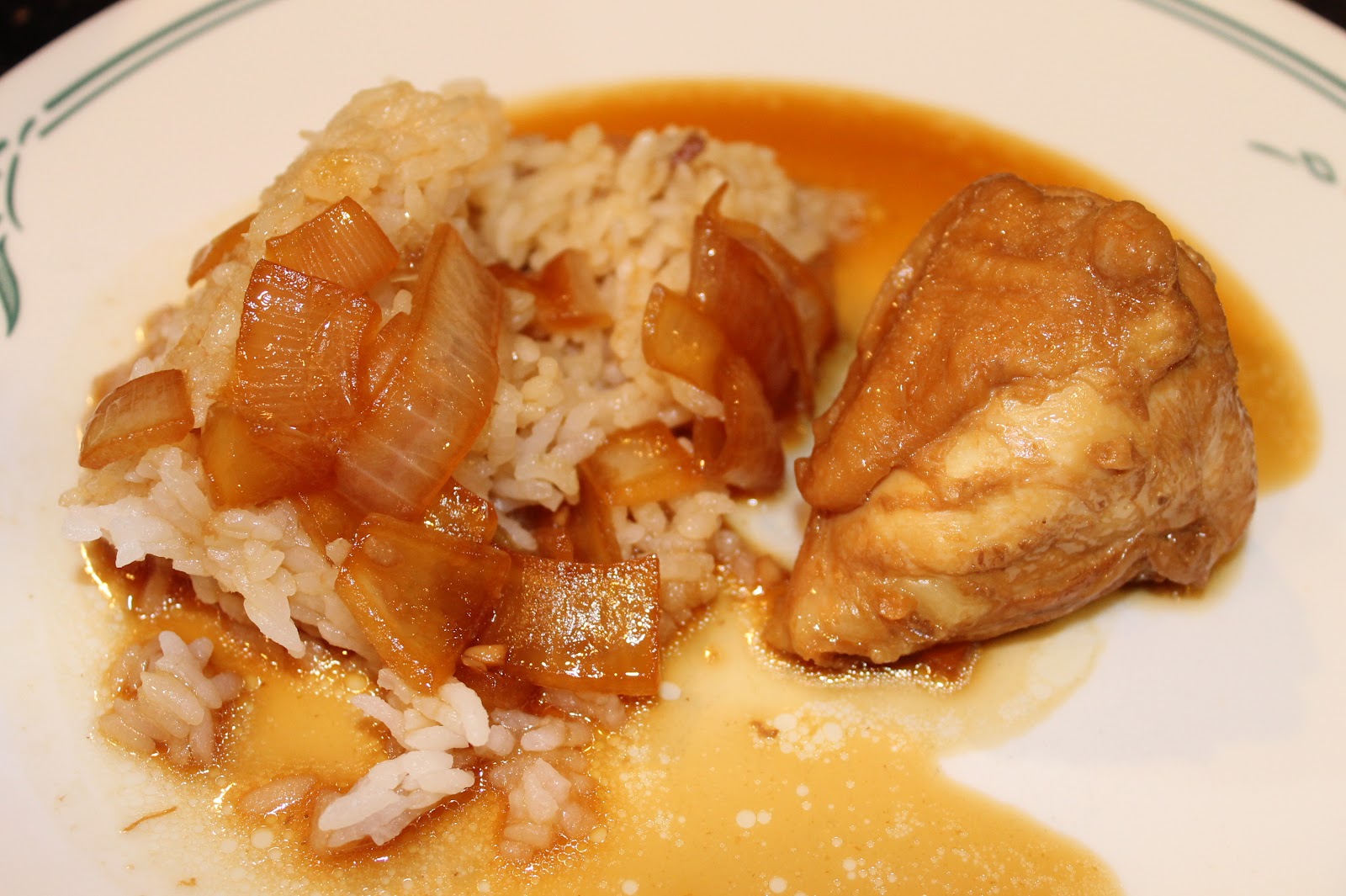
Chicken Adobo by Germ

So here is yet another recipe I thought I had already posted on Mélange, but it turns out I was wrong.  I did publish it as a note on my Facebook page, but forgot to replicate it to my blog, once it was created.  Oops!

Filipino Adobo, unofficially known as the national dish of the Philippines, has its roots in Spanish cuisine, but its preparation and flavor is entirely Filipino. Although it also shares a name with some Mexican dishes, they are not the same by any stretch.

This is by no means the only way to cook The Philippines' national dish; this is just how I've prepared it since I was in college. There are so many varieties based on region and preference. Some more spicy, some with more savory elements (like fresh herbs, etc.). However, all share two main, basic ingredients: soy sauce and vinegar. It's the vinegar that sets this dish apart and gives it its unique flavor. I make it with sugar so it ends up a sort of adobo/sweet-and-sour hybrid. Very popular at pot lucks.  You can modify it according to your own tastes, either using less sugar or omitting it altogether.  Just don't take out the vinegar.  ;)


Ingredients:
1 whole fryer chicken, cut up (about 8-10 pieces, depending if you cut up the split chicken breasts)
4-5 cloves garlic, chopped
2-3 white onions, roughly chopped - larger slices
1 Tbsp peppercorns
3-4 Bay leaves
2 Tbsp sesame oil (or enough to barely coat bottom of pan or pot)
1 C soy sauce (use gluten-free variety to make this a GF dish)
1 C apple cider vinegar
1 C sugar
1 C warm water
White sticky rice

Directions:
In mixing bowl or large measuring cup, combine soy sauce, vinegar, sugar and water. Set aside.  In stock pot or dutch oven, heat to medium high, add sesame oil, then add chicken.  Brown one side.  Flip, then add garlic and continue to brown other side.  Add onions, soy sauce mixture, peppercorns and bay leaves.  Bring liquid to a boil, then reduce heat to simmer for a minimum of 15 minutes, or until onions begin to turn translucent.  Serve with rice.


Serves 6-8.

~~~~~~
GBAdams
03/08/2010

Monday, December 12, 2011

Hazelnut Champorado (Chocolate Rice Porridge)

Here's another traditional Filipino dish.  Champorado is typically a breakfast-type of meal, usually served with  a cured meat, such as a bacon or Filipino tocino (shown at right), and is a heartier alternative to chocolate Maypo or Cream of Wheat.

The inspiration for this recipe came from two places for me: a college friend and my cousin.  I have my friend to thank for putting the original idea in my head; during a discussion once I mentioned how the only Filipino recipe in which I recalled normally seeing chocolate (no, dinuguuan does NOT count!) was champorado.  Chocolate icings or candies like we see here in the U.S. were not prevalent when I was growing up; it just wasn't practical because of the tropical heat.  So then over the next few weeks, while I was mulling over making champorado, my cousin who was visiting for Thanksgiving mentioned adding Nutella to it and how much better it made the dish.  Whoo boy, was he ever right.  It adds a depth to the chocolate taste that I never would have guessed could have been possible. Turned it right up to 11.  ;)  So here you go, here's what I came up with after those two influences.  And now that it's colder, this dish is the PERFECT breakfast treat...sort of like hot chocolate in a bowl.  ;)  I hope you enjoy.

(Thank you, Maria D-P, and Francis!)


Ingredients:
6 C day-old (or several days-old) sticky rice
6 C milk
1 can sweetened condensed milk (I use the fat-free kind)
⅔ C unsweetened powdered cocoa (such as Ghirardelli)
¼ C Nutella (chocolate hazelnut spread)
1 tsp salt

Directions:
In a large saucepan, heat milk on medium heat; be sure to stir often so milk does not burn at the bottom of the pan.  When milk has warmed to the point of starting to steam, add sweetened condensed milk and salt.  Using a whisk will help to mix everything in easier.  While milk mixture is heating up, break up leftover rice so that there are no longer any huge clumps.  Add to saucepan.  Vigorously stir for an additional 10 minutes.  Add powdered cocoa.  Stir until all the powder has dissolved and there are no longer any small cocoa clumps.  Add Nutella, and stir until it has blended fully into the porridge.  If champorado is too thick at this point, gradually add more milk until desired consistency is achieved.  Serve warm.  (Reheat leftovers with milk.)

Hazelnut Champorado, with a few white chocolate shavings sprinkled on top.  ;)

Makes 10 servings; perfect to make ahead of time and reheat on cold mornings!  ;)

~~~~~~
GBAdams
11/27/2011

Sunday, December 11, 2011

Pancit Sotanghon

This is a recipe I culled partly from my memory and partly from what's out there on Filipino recipe sites; liked a little here, a little there, etc. Put it all together and you have my take on one of the staple noodle dishes of my culture.

Several things to note:  Honestly, this recipe is NOT difficult.  It is, however, very time-consuming.  It takes time to boil the chicken, cool, shred, cut up all the veggies ahead of time, soak the noodles, etc.  So as long as you stick close to the steps, you should be OK.  As with any Asian stir-fry dish, the key is to have everything cut up ahead of time so you don't have to think about it as you're stirring away...all you have to do is dump in the ingredients as you go.  Also, 99% of these ingredients can likely be found in your local grocery store (yes, even the fish sauce nowadays); I have not always seen bean thread noodles there, and especially not the Chinese sausage, so for these items you will probably need to go to a specialty Asian market.  Rice sticks or thin rice noodles can be substituted, but growing up my mom always used bean thread noodles, also known as lungkow, so that's what I use because I like to carry on many of her traditions.  :)

Bean thread noodles, aka "lungkow"

Veggies can be interchanged, depending on your taste.  Other vegetable ideas include but are not limited to: sliced white button mushrooms, julienned red & green peppers, zucchini (not a personal favorite), pea pods, bean sprouts, etc.  Also, I take a shortcut by buying pre-packaged shredded carrots instead of doing them myself.  It's neater, faster, and heck, why not?

One last thing worth mentioning: Calamansi (cah-lah-mahn-SEE) is a small citrus fruit native to Southeast Asia, and definitely prevalent in Filipino cooking.  Usually they are halved and then squeezed over things like fish & pork so that the citrus juice accentuates whatever dish it's being added to.  If you don't live in an area that normally has access to calamansi (such as where I live in Colorado), small limes or even lime juice can be substituted and used instead.


Good luck...and if you make this dish, please write back and let me know how it turned out for you!  :)

Ingredients:
Boiled Chicken -
1 half split chicken breast, boneless & skinless
2 chicken thighs, boneless & skinless
2 Tbsp garlic powder
2 Tbsp granulated chicken bouillon (or chicken broth and add kosher salt to taste)
6-8 C water

Noodle Mix - 
6 oz (½ a package, or 4-5 individual links) sliced Chinese sausage
6 oz chopped onions
3 cloves garlic, finely diced
½ head cabbage, roughly shredded (meaning not as finely shredded as for cole slaw or sauerkraut)
1-2 (about 5-6 oz) shredded carrots
1-2 C sliced green beans
2-3 Tbsp canola or vegetable oil
8-10 oz bean thread noodles (1 package, or several smaller packages, depending on the brand)

Sauce -
1 C chicken broth
1/3 C dark soy sauce (not low sodium)
2 Tbsp fish sauce

Garnish - 
2-3 stalks of green onions, thinly sliced
5-6 calamansi halves OR 3-4 small limes, sliced into segments

Directions:
Bring water with garlic powder and bouillon to a rolling boil.  Add chicken.  When water comes back to a boil, bring down heat to high simmer.  Skim off any chicken "foam" as necessary.  Cook 15 minutes or until all pieces are cooked thoroughly. Set aside and cool.  (This step can be done well ahead of time.  I sometimes boil large batches of chicken, freeze them in sets, and thaw them out as needed.) When chicken has cooled, roughly shread (pull apart) meat.  Not as finely as for things like BBQ sandwiches or tacos, but don't leave overly-large chunks.


Mix broth, soy sauce and fish sauce in a bowl or large measuring cup; set aside.


Chop up all the vegetables and sausage, striving for even, uniform pieces as much as possible.


Before you start cooking, soak bean thread noodles in warm water and set aside.  Heat up a wok or other large, high-sided pan to as high of heat as possible; add vegetable oil. Start by sautéeing onions, then add Chinese sausage and garlic. When onions have started to take on translucency, add cabbage and carrots.  While cabbage & carrots have started to cook, set soaked noodles in a colander to drain.  Stir veggies & sausage in the pan vigorously until cabbage has also started to become translucent and wilt; add the green beans.  Keep stirring constantly so that nothing sticks to the side or bottom of the pan.


Place drained noodles into pan, then pour broth over noodles, covering as evenly as possible.  Using 2 utensils (spaghetti ladle and/or flat spatula), toss noodle mixture well, like a salad, in order to evenly distribute veggies and sauce within the noodles.


Garnish with finely sliced green onions and serve with calamansi or lime wedges.

How the pancit looks when placed into a serving tray...

...and how it looks, ready for a potluck presentation. :)


Serves about 10 people

~~~~~~
GBAdams
11/16/2011

Wednesday, September 14, 2011

Basic Filipino Marinade (Germ's Style)

The finished product how we normally have it -- grilled, on a bed of lettuce & a warm pita.
After I was married and was seriously cooking for a household, I tried to replicate the marinade for the BBQ kebobs I loved so much from family picnics, but was never successful.  One time at a gathering at his family's house, my beloved late uncle, Papa Jess, told me the secret to the Filipino marinade: 7-Up.  I nearly fell over, I was so shocked.  I think I actually said to him, "Get OUTTA here!"  Sure enough, the next time I made the marinade, it was perfect. It was like the puzzle was finally complete.  So here is my version of the marinade, tweaked over the years til I got it how I liked it.  I hope you enjoy it, too.  :)


Ingredients:
1 C Soy Sauce (full sodium works best because it will get diluted with the other liquids that are added)
3-4 Cloves minced garlic OR 2 Tbsp Garlic powder
½ C Brown sugar (packed)
1 tsp Ground ginger
½ C Rice vinegar
1 can 7-Up

Blend well before adding it to meats.  For best results, pour over the meat and refrigerate in an air-tight container for at least a day or more before grilling.  (I like to go 3-4 days to ensure the meat REALLY gets infused with the flavor.)

Can be used on pork, chicken or beef.  I prefer marinating srips of pork with some slight marbling within; if you choose meats that are extremely lean, they will come out tough and chewy.  I recently experimented with strips of chuck steak and they were INCREDIBLE.


Strips of beef in the marinade, Day One:


This is what the same meat looks like right out of the fridge, 4 days later:


Grilling on a screen designed for small meats & veggies.  Keeps 'em from falling through the grates.  :)


...and some grilled onions:


Normally I put the meat & veggies on a pita bread, but saw the flatbread package in the store and decided to try that.  MUCH better - it's thinner than a pita, so it doesn't fill you up as easily.


The finished product.  (Meat can also be skewered onto wooden sticks for kebabs/yakitori-type grilling.  That's how they're usually presented, FIlipino-style.)  Yum!  :)


~~~~~~
GBAdams
09/14/11

Wednesday, September 7, 2011

Chicken Adobo (Adobong Manok)

This is by no means the only way to cook The Philippines' national dish.  There are so many varieties based on region and preference.  This is just the way I prepare it.  :)


Ingredients:
1  whole fryer chicken, cut up (about 8-10 pieces, depending if you cut up the split chicken breasts)
4-5  cloves garlic, chopped
2-3  white or yellow onions, roughly chopped - larger slices
1 Tbsp peppercorns
3-4  Bay leaves
2 Tbsp sesame oil (or enough to barely coat bottom of pan or pot)

1 C  soy sauce
1 C apple cider vinegar
1 C sugar
1 C warm water

White sticky rice

Directions:
In mixing bowl or large measuring cup, combine soy sauce, vinegar, sugar and water. Set aside.  In stock pot or dutch oven, heat to medium high, add sesame oil, then add chicken.  Brown one side.  Flip, then add garlic and continue to brown other side.  Add onions, soy sauce mixture, peppercorns and bay leaves.  Bring liquid to a boil, then reduce heat to simmer for about 10-15 minutes, or until onions begin to turn translucent.  Serve with rice.


Serves 6-8.


~~~~~~
GBAdams
03/08/2010